
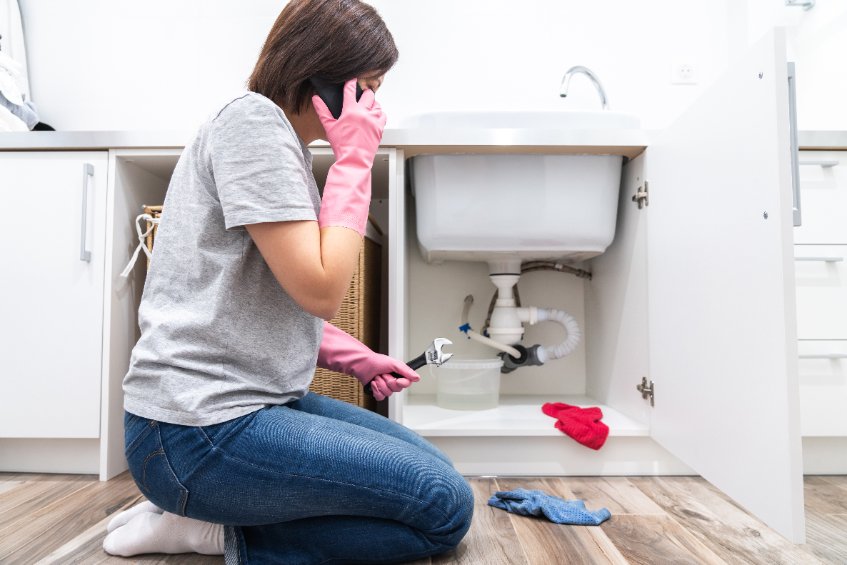
That smell hits you when you walk into the bathroom and you immediately start going through the mental checklist. Did someone forget to flush? Is there something under the sink? Did the dog get in here? Then you realize it’s coming from the drain, and it’s not going away on its own.
Sewer smell in a bathroom sink is one of the more common plumbing complaints we hear, and it’s almost always fixable. The cause determines the solution, so before you start pouring things down the drain, it helps to understand what’s actually creating the odor.
What Causes Sewer Smell in a Bathroom Sink?
The smell you’re noticing is sewer gas, a mix of gases produced by decomposing organic matter in the drain system. It can include hydrogen sulfide, which is the rotten egg smell most people recognize, along with ammonia, methane, and other byproducts. Your plumbing system is specifically designed to keep those gases out of your living space. When the smell gets through, something in that system isn’t doing its job.
The most common culprits in a bathroom sink include:
- A dry P-trap that has lost its water seal
- Biofilm and organic buildup inside the drain and drain stopper
- A blocked or improperly installed vent pipe
- A loose or deteriorated drain seal or wax ring on a nearby toilet
- A cracked or damaged pipe somewhere in the drain line
Some of these have simple explanations. A guest bathroom sink that doesn’t get used often, for example, can dry out the P-trap in a matter of weeks. Others, like a cracked pipe or a venting problem, are harder to identify without a professional inspection and aren’t something a homeowner can solve with a bottle of drain cleaner.
What Is a P-Trap and Why Does It Matter?
The P-trap is the curved section of pipe under your bathroom sink. It holds a small amount of water at all times, and that water acts as a seal that blocks sewer gases from traveling back up through the drain and into the room. It’s a simple, effective design that works well as long as the water stays in the trap.
When a sink goes unused for an extended period, that water evaporates. No water in the trap means no barrier between your bathroom and the sewer system. The fix for a dry P-trap is running the water for thirty seconds to a minute to refill it. If the smell goes away after that and stays gone with regular use, a dry trap was the issue.
If the smell comes back even when the sink is used regularly, the P-trap itself may be damaged, improperly installed, or there may be a secondary issue driving the odor. That’s when a plumber’s assessment is the right next step rather than more guessing.
The Drain Buildup Problem
Bathroom sinks collect a steady stream of toothpaste, soap, hair, skin cells, and general grime. Over time, that organic material builds up on the inside of the drain, the stopper, and the pipe walls just below the drain opening. It breaks down, and as it does, it produces odor. This is probably the most common source of sink smell in actively used bathrooms.
You can remove the drain stopper on most bathroom sinks, most lift straight out or unscrew, and clean it manually. The gunk that accumulates on a drain stopper is reliably unpleasant. Cleaning the stopper and rinsing the drain opening can reduce odor from buildup, but it doesn’t clean the pipe walls further down the line.
A professional drain cleaning does. We use equipment that removes buildup from inside the pipe rather than just pushing it further down, which is what a lot of store-bought drain products actually do. If buildup is the source of the smell and the drain is running slowly as well, a professional cleaning solves both problems in one visit.
When the Problem Is the Vent Pipe
Your plumbing system has a vent pipe, usually running up through the roof, that allows sewer gases to escape outside the home and also lets air into the drain system so water flows properly. When that vent is blocked, whether by debris, a bird nest, or other obstruction, gases that should be escaping upward have nowhere to go except back down through the drain lines and into your fixtures.
A blocked vent pipe isn’t something you’ll diagnose by looking at the sink. The signs are often subtle: sewer smell from multiple fixtures, gurgling sounds when drains empty, or a toilet that seems slow to clear. If the smell in your bathroom sink is accompanied by any of those, a vent issue is worth investigating.
Clearing a blocked vent pipe is not a DIY project. It involves working on the roof and using equipment to clear the obstruction without pushing it further into the line. This is a job for a licensed plumber.
Cracked or Damaged Pipes
A crack or break in a drain line, even a small one, can allow sewer gas to escape into the space behind walls or under floors and eventually work its way into the room. This type of problem tends to produce a persistent smell that doesn’t respond to cleaning or trap refilling because the source isn’t at the drain opening. It’s somewhere in the pipe itself.
We’ve seen cracked pipes behind bathroom walls that homeowners lived with for months, assuming the smell was coming from something else, before a camera inspection located the actual source. A video inspection of the drain line is the fastest and most accurate way to find pipe damage without opening walls unnecessarily.
When to Call a Plumber for Sewer Smell
A few situations call for a professional rather than a DIY attempt:
- Call us if the smell is strong, persistent, or getting worse. Sewer gas isn’t just unpleasant. At sufficient concentrations, it can be a health concern. Hydrogen sulfide at low levels causes headaches and nausea. If the odor is strong enough to be noticeable throughout the room, or if anyone in the home is experiencing symptoms like headaches, dizziness, or nausea, get out of the space and call a plumber.
- Call us if you’ve already tried the obvious fixes. If you’ve cleaned the stopper, refilled the trap, and the smell is still there a week later, something else is driving it. At that point, guessing gets expensive and a diagnostic visit gets you an actual answer.
- Call us if the smell is coming from multiple fixtures. A single smelly sink is usually a localized drain issue. Smell from multiple drains or fixtures points to something in the main drain line or the vent system, and those problems don’t resolve on their own.
- Call us if you notice the smell alongside slow drains, gurgling, or any water backing up. These are signs that the drain system has a problem beyond surface-level buildup.
What Mr. Plumber Does to Find and Fix the Source
When a homeowner calls us about sewer smell, we don’t start by guessing and charging for each guess. We inspect the system: the P-trap condition, the drain line, the vent, and the surrounding pipe connections. If a camera inspection is warranted, we’ll tell you why before we run it.
Once we know the source, we explain it clearly and give you the options before any work starts. Sometimes it’s a straightforward drain cleaning. Sometimes it’s a vent clearing or a pipe repair. In either case, you know what the problem is and what it costs to fix it before we do anything.
Sewer smell in a bathroom sink is fixable. It just requires finding the actual cause rather than masking it with something that smells better for a few days. If you’re dealing with persistent drain odor in your San Antonio home, call Mr. Plumber at (210) 343-2173 and we’ll figure out what’s actually going on.